News about the Museum of Sacred Art
6 – NEWS ABOUT THE MUSEUM OF SACRED ART
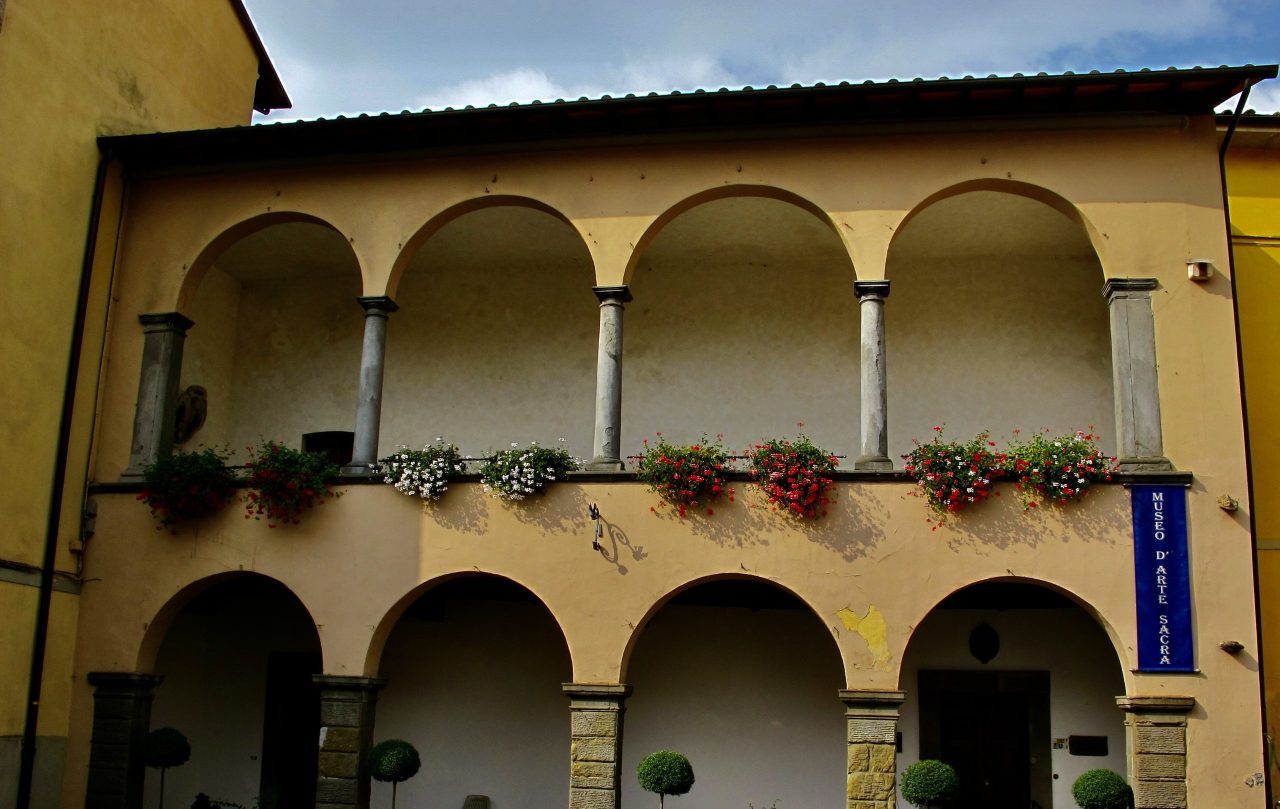
The Museum of Sacred Art was established in 1936, in a seventeenth-century building that housed the Confraternity of San Michele and San Vincenzo. Founded under the guidance of Ugo Procacci as a place to gather furnishings, paintings, vestments and sacred objects from the fourteenth to the sixteenth century, the Museum today holds some of the most interesting works of art in the area, once exposed to the risk of theft in country churches. The collection is laid out in six rooms, presenting important artefacts, liturgical hangings, pieces of sacred goldsmithery, paintings and wooden sculptures. Among these, particularly well known is the Virgin Annunciate by the Lucchese sculptor Matteo Civitali (1436–1502), on view to the public after a careful restoration that has returned it to its original appearance. The collection also holds an interesting variety of paintings, often objects of veneration, whose history is bound to this territory. Besides the precious liturgical furnishings and the refined examples of sacred goldsmithery that distinguish the museum’s collections, the visitor can see a piece of great rarity: an imposing Flemish tapestry datable to the early sixteenth century. This work was stolen on the night between 12 and 13 December 1932 and, fortunately, recovered almost at once in a ditch near the beach at Calambrone. It had probably been taken to order for some wealthy collector and was about to leave from the port of Livorno. It was precisely after that theft that it was decided to create a museum of sacred art in which to keep and guard all the most precious works of art from Camaiore, until then held in the churches of the area.
Catarsini’s work is on display here, La Madonnina delle Darsene.