Cantiere sul Canale
- Year
- 1951
- Medium
- olio su tavole
- Dimensions
- cm 45x56
- Number in the travelling exhibition
- 68
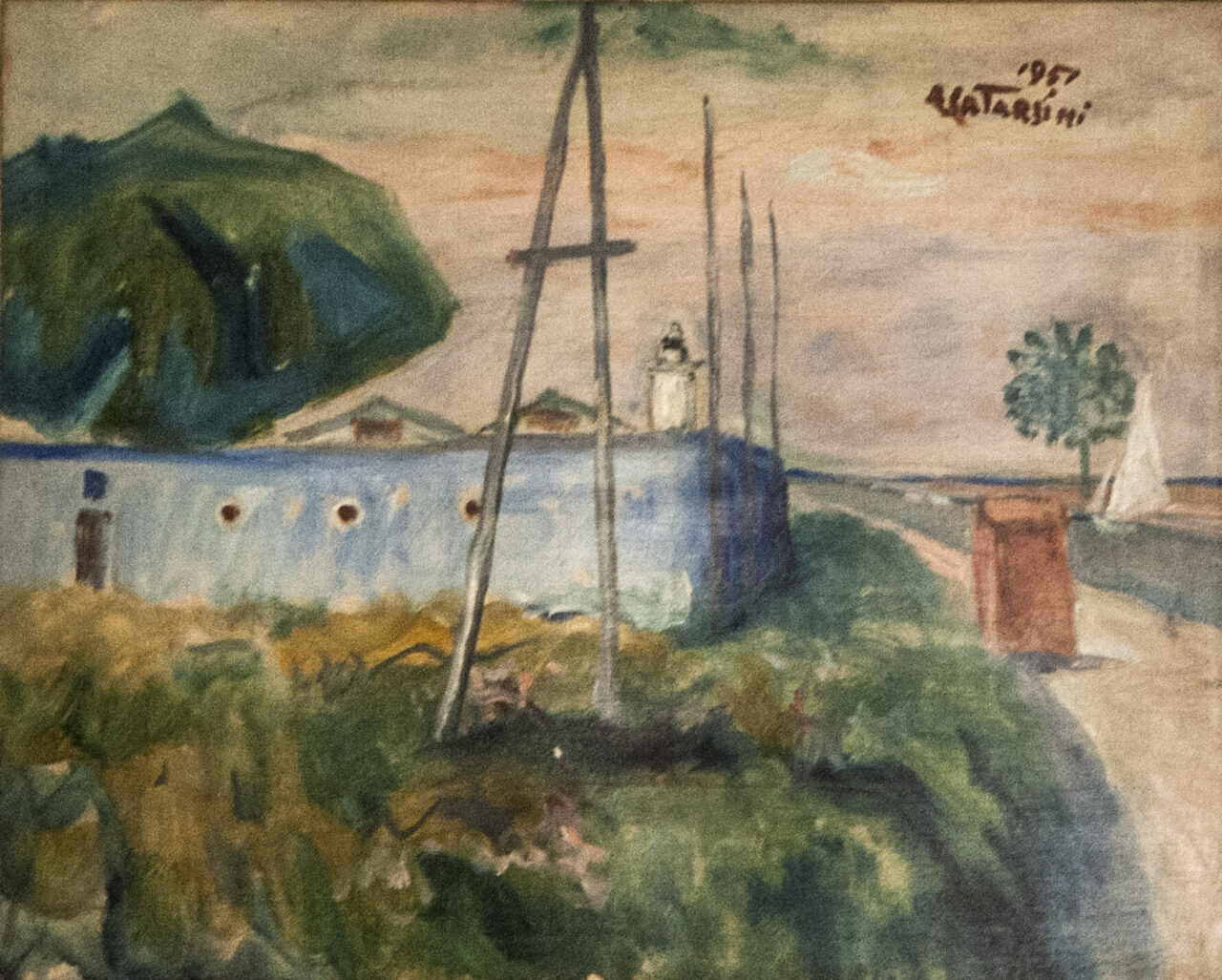
68. Cantiere sul canale, 1951, oil on panel, cm 45 x 56
This horizontal work offers a glimpse of the Burlamacca Canal in Viareggio, captured in a moment of absolute stillness. In the foreground, the scene is divided between a large green meadow on the left and a yellow path on the right, which leads the eye toward the thin line of the sea in the background. In the center, the scene is dominated by the side of a construction site: a long, white, windowless building that occupies almost the entire width of the canvas and adjoins a small red cabin. The sky has a dusty color, typical of the mist that often envelops the Viareggio coastline. The presence of two leafy trees and the bright green of the field suggest that it is spring. A metaphysical silence reigns. The absence of human figures outside leaves the viewer in doubt: is it a holiday or are the workers gathered inside the construction site? As in many of Catarsini’s works, time appears to stand still, suspended between the reality of work and the dimension of dreams.
INSIGHTS
The canal borders the city of Viareggio, around which world-famous shipyards developed in the twentieth century. This setting demonstrates how much unused space there was at that time, while today it is entirely occupied by ever-larger constructions.
Even in his post-war views of Viareggio, Catarsini displays a reflection on his own work that represents a profound and coherent renewal, evolving toward a synthesis between line and color.
It seems that Catarsini tended to adapt drawing to color rather than color to drawing, or that he enjoyed alternating them, almost playing with their respective roles, defying the pictorial tradition and customs that had characterized him in previous decades.
Viareggio has always represented for the artist a profound connection to his roots, a constant source of inspiration that allowed him to develop an international culture without ever denying his origins. In the docks and canals of his city, he rediscovered the essence of his earliest emotions.