Incursione aerea
- Year
- 1945
- Medium
- olio su cartone
- Dimensions
- cm 61x48
- Number in the travelling exhibition
- 67
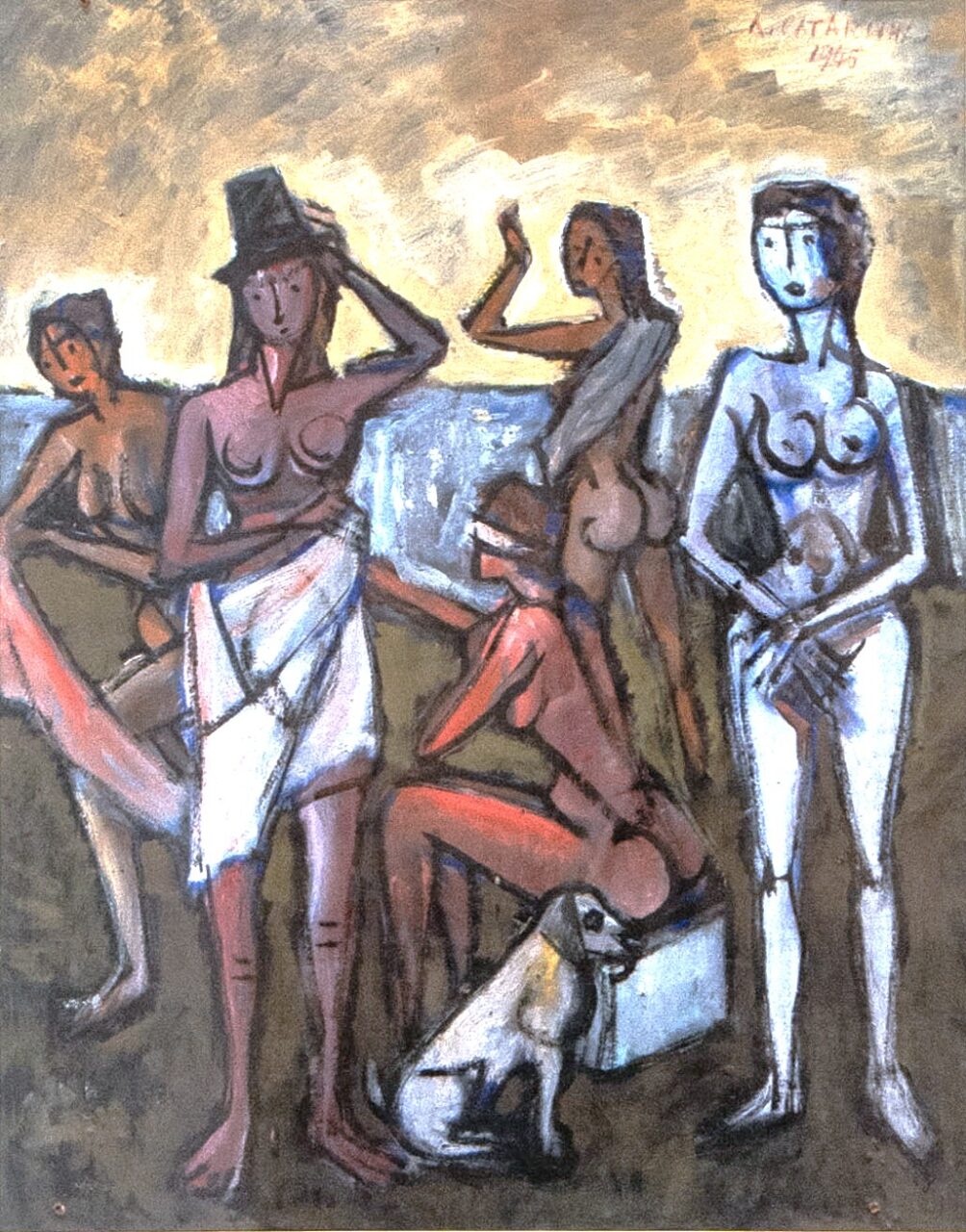
67. Incursione aerea (Air Raid), 1945, oil on cardboard, cm 61 x 48
Despite the title suggesting a wartime event, this vertical work reveals a dreamlike scene with five nude female figures on the beach in a carefree moment: they are sunbathing, have just bathed, or have just arrived… who knows. An air raid surprises them, but it is not visible. The composition is divided into three horizontal bands: the dark sand at the bottom, the blue of the sea in the center, and, at the top, a sky with shimmering shades of yellow and blue.
In the foreground: On the left: a standing, brown-haired stylized figure holds a white cloth around her waist with her left hand and supports a large black hat. In the center: a bright red woman, in profile to the left, sits on a white stool; she is blindfolded, has accentuated curves, and a pale dog at her feet, facing right. On the right: a stucco-colored figure streaked with black, with her hands crossed to cover her body.
In the background: * On the left: an ochre-colored figure captured in the act of advancing to the left. In the center: a brown figure portrayed in profile to the left, with a white cloth over her shoulder and her arm raised.
All the figures are defined by a sharp black border, a distinctive stylistic feature of Catarsini’s work during those years. The elongated faces and strong color contrasts forgo detail to evoke an elusive atmosphere: a scene suspended between surprise and the sudden instinct to stop or flee.
INSIGHTS
The title and date abruptly plunge us into the horrors of the Second World War, which hit Viareggio hard, evacuated at the time and with its beaches mined. It’s striking to note how, unlike works such as Bombed Houses (catalogue no. 13) or the fresco in the apse of the Church of San Martino in Freddana—where Catarsini depicts the drama of war with stark realism—here the artist chooses a different path.
The scene is entrusted to a dreamlike composition of five female figures on the beach, the most distant and fanciful image possible from the reality of those years. None of them conveys terror: Catarsini seems to have wanted to capture the moment of astonishment, that suspended second preceding the perception of danger and the consequent escape. A powerful contrast between the evasion of the imagination and the invisible threat looming from the sky.