Nude al bagno
- Year
- 1980
- Medium
- olio su compensato
- Dimensions
- cm 40 x 65
- Number in the travelling exhibition
- 58
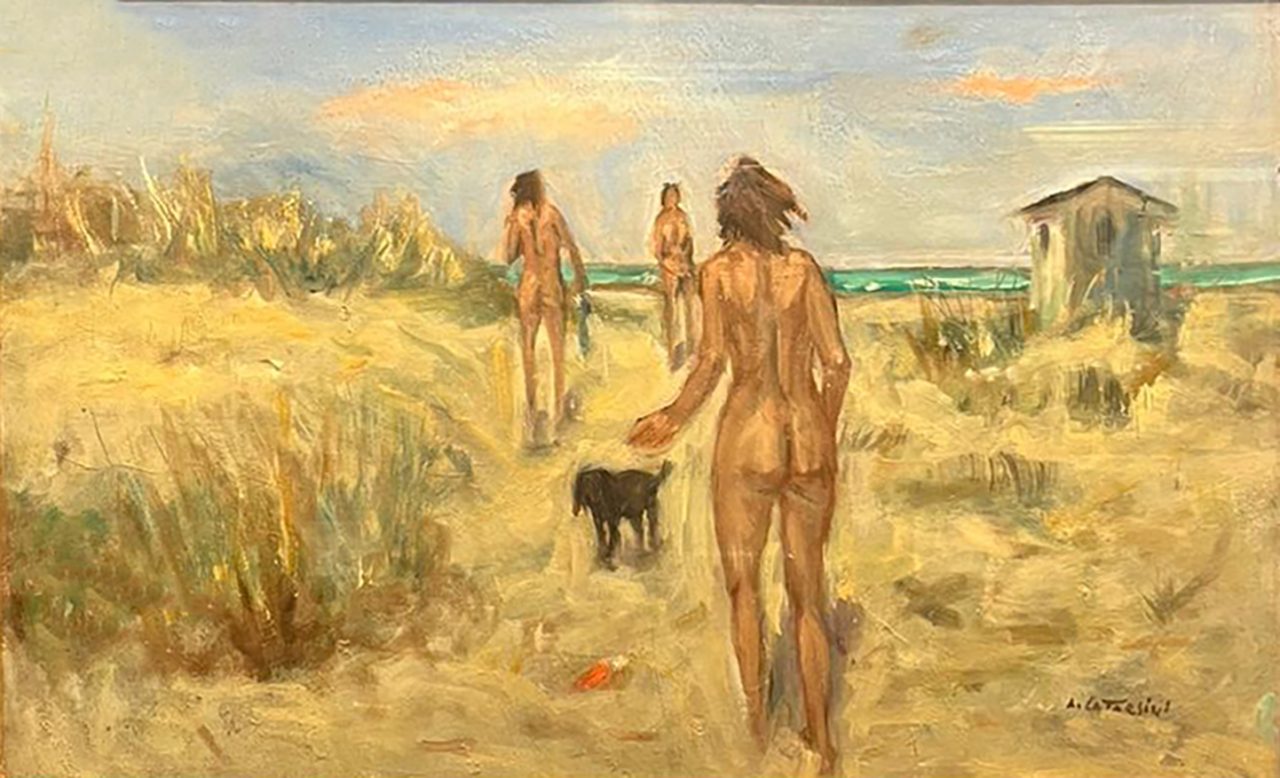
58. Nude al bagno, 1980, oil on plywood, cm 40×65
In this horizontal canvas, painted at the age of 81, Catarsini celebrates the luminosity of wild and uncontaminated nature. It is a hymn to the artist’s “eternal youth,” portraying the perfect harmony between the human body and the solitary landscape of the dunes. The scene is punctuated by the movement of three naked women, seen from behind, slowly making their way toward the water. In the foreground, right in the center, a woman walks along a path dug into the sand. Further ahead, arranged in a checkerboard pattern, the other two figures are about to reach the shore. On either side of the sandy path, the dunes, covered in typical coastal vegetation, can be seen. In the background, the sea is a blue stripe tinged with white waves. The only sign of human presence is a solitary, uninhabited shack, accentuating the sense of peace and isolation of the place.
The colors convey a sense of diffuse warmth. The sky is a dusty blue, but is punctuated by two red-orange clouds: an unmistakable sign that the sun is beginning to set, enveloping the sand and bodies in that golden light typical of sunset. Despite the artist’s maturity, the painting vibrates with freshness. The meticulous attention to the grain of the sand and the nuances of the dunes reveals a deep and enduring love for his homeland, transforming a simple dip in the sea into a timeless ritual.
INSIGHTS
Nature, silence, and the pristine beauty of the landscape are at the heart of this view of a Versilia beach. They evoke a wild image, as if seaside tourism had not yet altered their purity, restoring them to the appearance of the early years of the last century. With defined spaces and quick brushstrokes, Catarsini uses the expressiveness of color to communicate the feeling he feels when faced with a landscape now in the process of transformation, as if the poetry of those places now required new forms of expression capable of crystallizing its lost beauty.