The cuisine of the hinterland
9 – 9 – THE CUISINE OF THE HINTERLAND
The cooking of the Lucchesia was, and has remained, simple cooking, but tasty and intriguing. Some clear distinctions need to be made, though. There is, and there has always been, a peasant cuisine, and there is, as there has always been, a bourgeois one, in the Lucchesia as elsewhere.
Maria Anna Bonaparte Baciocchi (1777–1820), known as Elisa, was Princess of Lucca and the moving force behind a transformation in the customs and habits of the old Republic of Lucca, as well as the patron of the last great rebuilding works on the present Palazzo Ducale, carried out to a design by the architect Lorenzo Nottolini. Palazzo Ducale was not only the seat of the political and administrative government of Elisa’s Principality: with its halls, its parties and its banquets it was the symbol of a rediscovered social life, of a new way of communicating image and power.
The rich cuisine of the eighteenth-century Lucchese bourgeoisie, French in derivation, has no beans, no polenta, no pork, and if anything carries French shadings: rice pies, game, stuffed macaroni, garmugia (a soup of spring vegetables and veal), roast partridge, pheasant or grey partridge, veal fricassee, fruit sorbets. And speaking of Lucchese cooking one cannot ignore internal migration and geographical borders, which normally do not coincide with gastronomic ones. Hence, in the cooking of the Lucchesia, the vegetable tarts of Ligurian inspiration and the cecina; or, in the cooking of the sea, the striking case of cacciucco, originally the boast and pride of Livorno’s kitchen but adopted in Viareggio and along the whole Tuscan coast with truly minimal variations, still argued over by the greatest chefs. The recipe for cacciucco, spread and enthusiastically championed by Lorenzo Viani, who had discovered it in Livorno during a cacciuccata organised in 1936 by Costanzo Ciano, became the must of Viareggio’s trattorie. Another example is peposo. The emblem of the cooking of the Florentine province, born at Impruneta, it now has right of citizenship in almost every Tuscan province. There are even restaurants that carry its name; this tasty, working-class dish is in practice a beef stew in red wine enriched by small handfuls of black peppercorns, whence the name. Above all this bounty towers the legendary bistecca alla fiorentina, which certainly needs no introduction, and the tagliata, its sliced version. Worth remembering too is the Lucchese arrosto morto. The pillar of the cooking of the Lucchesia is bread, generally sciocco, that is saltless. With bread are made fettunta and a variety of soups: pancotto, panzanella, frantoiana, ribollita, pappa al pomodoro, crostini and so on. With the prized eight-row maize of the Garfagnana, polenta is made to accompany meat and fish stews, and also the black cabbage farinata, known too as intruglia or incavolata, the tasty winter dish common throughout the province.
Fresh pasta and the potato gnocchi of Campallorzo deserve a mention of their own; home-made pasta is generally based on water and flour, rather thick and coarse, which harmonises well with vigorous, tasty meat and fish sauces; in the most varied shapes (tagliatelle, tagliolini, maltagliati, tacconi, pappardelle) it is also found made with chestnut or spelt flour. The tordelli versiliesi, filled with meat and dressed with ragù, enjoy a well-deserved fame.
The meat dishes of the Lucchesia are traditionally based on pork (arista and rosticciana) and pork products (sausages, lardo, mortadelle, soppressate, biroldo — or buristo — so loved by Catarsini), or on farmyard animals: mainly rabbits, and then chickens, hens and ducks. As for the cooking, it is almost always simple: chiefly spit and grill, or typically domestic and family methods (stews and the like), and the famous crostini of chicken liver.
From Lake Massaciuccoli come the lake fish (tench and eels, for the most part; while the excellent trout dart in the streams of the Garfagnana); from the Migliarino San Rossore Massaciuccoli park come partridges, pheasants, wood pigeons, mallards, hares and wild boar, for lovers of feathered and furred game.
But the closer you come to the coast the more you find sea fish, for every taste and every pocket, since the fish market of Viareggio is one of the liveliest and most important on the Tyrrhenian, supplying important markets in northern Italy as well. Hence the stuffed mussels, the so-called cee (elvers), the sugo alla trabaccolara, the fritto di paranza and the brodetto di mare.
Very rich too are the variety and quality of pulses and vegetables: the schiaccione bean of Pietrasanta, the green beans of Sant’Anna, the hunchback cardoon of Capezzano Pianore and the barbe di prete (known elsewhere as scorzonera), the rapini.
The iconic sweets of this rich and generous land are Buccellato and Castagnaccio, the Torta di marzapane, the sweet semolina and rice tarts, the rice puddings, the bomboloni (frati) and the fritters of Saint Joseph.
In every area the restaurants taking part in the Cammino are listed, where besides tasting the typical dishes of the tradition you can find the «Catarsini menu» or a specific «Catarsini dish» that he was fond of.
The cooking of the Val Freddana
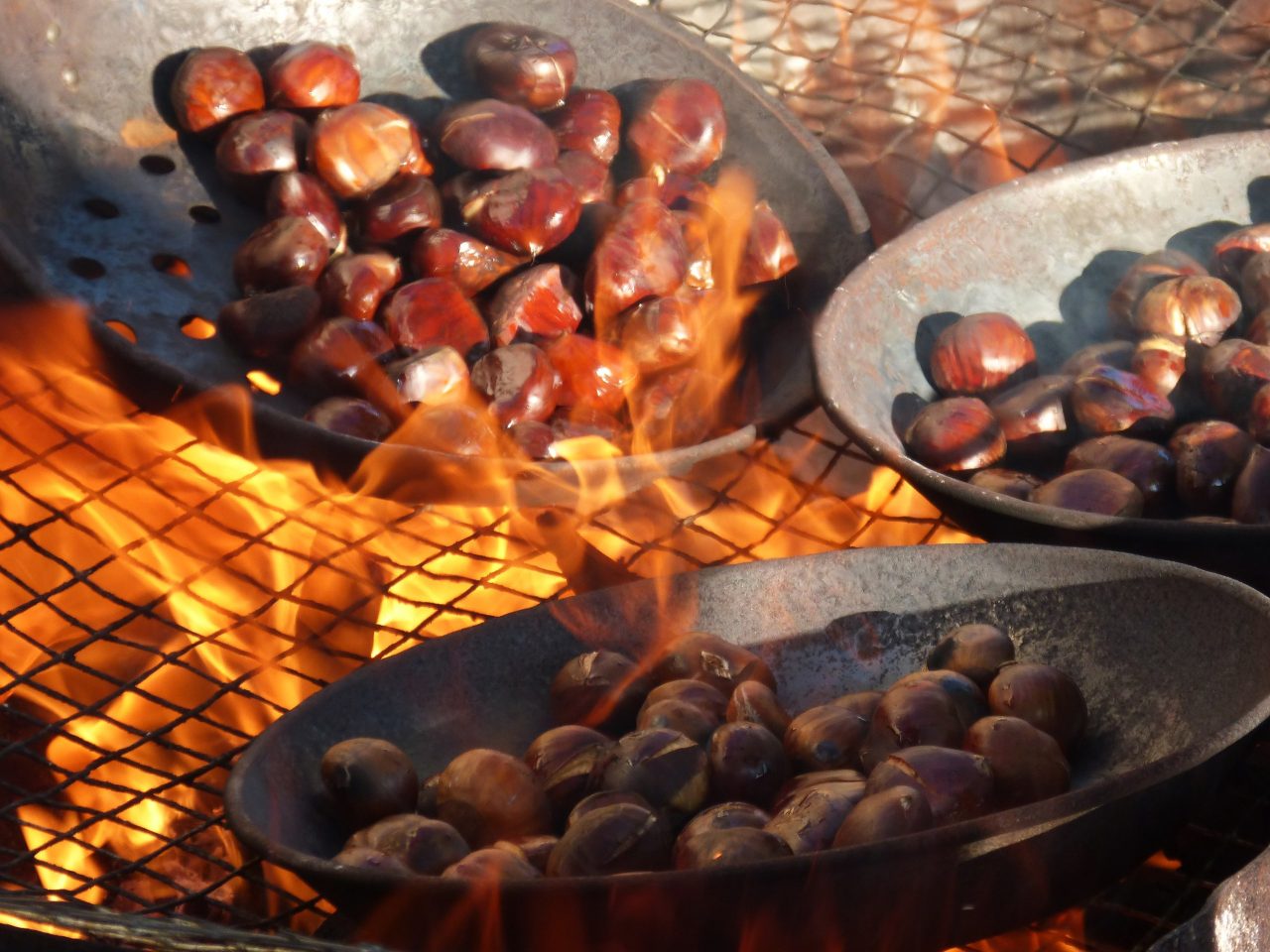
The valley is rich in olive groves, chestnut woods and vineyards; native honey is produced on the road to Camaiore, and the mid-mountain pastures yield fragrant pecorino cheeses and ricotta. In autumn there are various kinds of mushroom, above all the prized porcino. The valley is renowned for its soups, grilled meat with vegetables, stuffed hen, mushrooms, arista, pork livers, rosticciana with polenta, lamb with black olives and sautéed mushrooms, spit-roasted meats, fried vegetables, and boiled and roasted chestnuts. Chestnut flour, which fed the population for centuries, is also used to make gnocchi, tagliatelle and farinate. The spelt of the Garfagnana goes into pasta, breads and focacce, and also into pulse soups and tasty summer salads.